Aerial
Benefits of Aerial Fitness: Strength, Control and Movement Freedom
Aerial fitness combines strength, flexibility, and body awareness through suspension-based movements. Explore how aerial training develops unique physical capacities and offers an engaging alternative to ground-based training.

On this page
- What Is Aerial Fitness?
- Physical Benefits of Aerial Training
- Mental and Emotional Benefits
- Aerial Training for Different Goals and Levels
- Safety Considerations
- Combining Aerial with Other Training Modalities
- What to Expect in Your First Aerial Session
- Who Should Try Aerial Fitness?
- Common Questions About Aerial Training
- Getting Started with Aerial at Genesis Hybrid
Aerial fitness: training using suspended equipment like silks, hammocks, or aerial apparatus: offers a unique approach to building strength, flexibility, body control, and movement confidence. While aerial training originated in circus performance arts, it has evolved into an accessible fitness discipline that welcomes all levels.
At Genesis Hybrid in Paphos, our Aerial programme introduces you to suspension-based training through coached sessions designed for safety, progression, and comprehensive physical development.
What Is Aerial Fitness?
Aerial fitness involves exercises performed while suspended or partially suspended using fabric, hammocks, or apparatus. Rather than training against gravity in traditional ways (standing, lying, or sitting on equipment), aerial training suspends you in the air, creating unique loading patterns and movement challenges.
Common aerial modalities include:
Aerial silks: Long fabric pieces suspended from above, used for climbing, wrapping, drops, and poses that require grip strength, body control, and coordination.
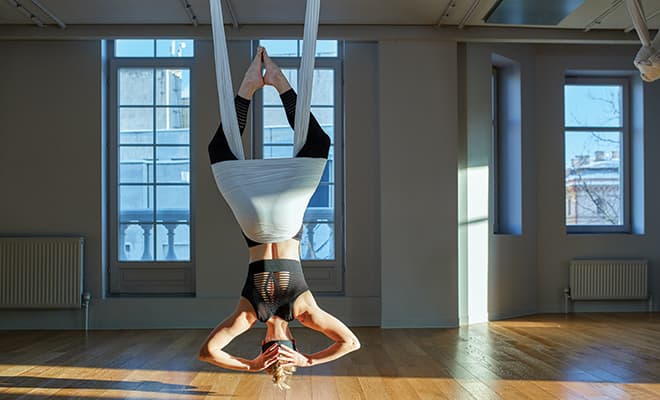
Aerial hammock: U-shaped fabric that supports body weight, allowing for inversions, flips, and strength work with more support than silks.
Aerial hoop (lyra): Circular metal apparatus suspended from above, used for strength poses, spins, and transitions.
Aerial yoga: Combines traditional yoga poses with aerial hammock support, emphasizing flexibility, decompression, and relaxation alongside strength.
Each modality offers different challenges and benefits, but all share common elements: developing upper body and core strength, improving flexibility, building body awareness, and requiring problem-solving as you learn how to move in three-dimensional space.
Physical Benefits of Aerial Training
Aerial fitness develops specific physical capacities:
Upper Body and Grip Strength
Aerial training demands significant upper body strength. Climbing silks, holding positions, and controlling descent all require pulling strength, shoulder stability, and grip endurance.
Unlike traditional pulling exercises that load muscles in predictable patterns, aerial work creates constantly changing loads as your body position shifts. This develops functional strength through variable positions and ranges.
Grip strength, often overlooked in training, is essential for aerial work. Holding fabric, supporting body weight, and controlling movement all tax grip endurance. This grip strength transfers to daily activities like carrying objects, opening jars, or holding onto things securely.
Core Strength and Control
Every aerial movement requires core engagement. Maintaining body position while suspended, controlling rotation, and moving through transitions demand constant core activation.
This isn't the same as isolated core exercises. Aerial training develops integrated core strength: the ability to stabilize and control your torso while limbs move and loads change. This type of core strength improves posture, reduces back pain risk, and enhances performance in other physical activities.
Flexibility and Mobility
Many aerial poses require and develop flexibility, particularly in hips, shoulders, and spine. The suspended environment allows for unique stretching positions that aren't accessible on the ground.
Active flexibility: strength within extended ranges of motion: is especially emphasized. You're not just passively stretching; you're controlling and strengthening muscles while in stretched positions.
This combination of flexibility and strength improves functional mobility more effectively than passive stretching alone.
Spatial Awareness and Proprioception
Training in three-dimensional space while inverted or suspended develops spatial awareness and proprioception: your sense of where your body is in space.
This enhanced body awareness transfers to other movement practices and improves coordination, balance, and movement efficiency.
Decompression and Joint Health
Inversions and suspended positions create gentle traction on the spine and joints. This decompression can feel relieving, particularly for people who spend long hours sitting or experience compression-related discomfort.
While aerial training isn't medical treatment, many people report feeling less tension and more mobile after aerial sessions.
Cardiovascular Conditioning
While aerial training is often thought of as pure strength work, it can provide cardiovascular challenge, especially during sequences that combine multiple movements or involve continuous climbing and transitioning.
Heart rate elevates during challenging aerial sequences, providing metabolic stimulus alongside strength and skill development.
Mental and Emotional Benefits
Beyond physical development, aerial training offers psychological benefits:
Confidence Building
Learning to support your body weight in air, inverting, and mastering new skills builds confidence. Each progression: first time climbing, first inversion, first pose held independently: provides clear achievement markers.
This confidence often transfers beyond training. Overcoming the initial fear of suspension and consistently achieving new skills develops self-efficacy that influences how you approach other challenges.
Focus and Presence
Aerial training requires complete attention. You can't effectively move through aerial sequences while mentally distracted. The need for focus brings you into the present moment, creating a meditative quality to training.
This mental engagement provides a break from daily stress and rumination. Many people find aerial training psychologically restorative for this reason.
Problem-Solving and Creativity
Learning aerial skills involves figuring out how to position your body, where to place fabric, and how to transition between poses. It's physical problem-solving that engages cognitive function alongside physical work.
As you progress, you can explore creative movement combinations and personal expression through aerial sequences.
Community and Support
Aerial classes create supportive environments where participants encourage each other, celebrate progress, and work through challenges together.
The shared experience of learning challenging skills creates bonds and provides social connection that enhances training enjoyment and adherence.
Aerial Training for Different Goals and Levels
Aerial fitness accommodates various goals and fitness levels:
Complete Beginners
Aerial training is accessible to beginners. You don't need existing strength or flexibility to start; you build these capacities through progressive training.
Initial sessions focus on familiarisation with equipment, basic grips, simple climbs, and foundational poses. Coaches provide modifications and support to ensure safe, appropriate progression.
Many beginners worry they lack the strength for aerial work. Progressions start with partially supported movements and gradually increase load as strength develops.
Complementary to Other Training
Aerial training complements ground-based strength and conditioning work. It develops strength patterns not trained through typical barbell or bodyweight exercises and provides movement variety that keeps training engaging.
Many Genesis Hybrid members combine Hybrid Strength & Conditioning or Strength Training with Aerial sessions, creating balanced development across different movement modalities.
Active Recovery and Mobility
Lower-intensity aerial sessions or aerial yoga provide active recovery that enhances mobility and provides decompression without high systemic stress.
Combining intensive training programmes with aerial mobility work creates balance between high-load strength work and restorative movement practices.
Specific Skill Development
For those interested in developing specific aerial skills: drops, complex wraps, dynamic movements: aerial training becomes focused skill practice alongside strength building.
Progressive programmes move from foundational skills to more advanced techniques as strength, control, and confidence develop.
Safety Considerations
Aerial training involves being suspended above ground, requiring proper safety protocols:
Qualified Instruction
Aerial training should always be learned under qualified instruction. Coaches ensure proper setup, teach safe techniques, spot when necessary, and progress you appropriately.
At Genesis Hybrid, Aerial sessions are coached by instructors with specialised aerial training certification and experience.
Proper Equipment and Setup
Aerial apparatus must be properly rigged, rated for appropriate weight, and inspected regularly. Training facilities should have adequate ceiling height, proper mounting hardware, and safety mats below apparatus.
Genesis Hybrid's aerial setup meets safety standards with appropriate equipment, mounting, and facility specifications.
Progressive Skill Development
Safe aerial training follows progressive skill development. Attempting advanced techniques before mastering prerequisites increases injury risk.
Coaches manage progression, ensuring you've developed the strength, control, and technique needed before advancing to more demanding skills.
Listening to Your Body
Aerial training can be demanding on hands, wrists, shoulders, and core. Fatigue, pain, or discomfort are signals to rest, modify, or stop.
Communicate with your coach if anything feels wrong. Pushing through pain in aerial training risks injury.
Managing Inversions
Inversions (being upside down) can feel disorienting initially and are contraindicated for certain medical conditions (uncontrolled high blood pressure, glaucoma, recent concussion, certain heart conditions).
If you have medical conditions that might be affected by inversion, consult with a healthcare provider before beginning aerial training.
Combining Aerial with Other Training Modalities
Aerial training integrates well with other Genesis Hybrid programmes:
Aerial + Strength Training
Combining Strength Training with Aerial creates powerful synergy. Barbell strength work builds foundational pulling and core strength that enhances aerial performance. Aerial training develops grip strength, body control, and movement capacity that complements ground-based strength work.
Example weekly structure:
- 2-3 strength training sessions for foundational strength development
- 1-2 aerial sessions for skill work and movement variety
Aerial + HYROX or Conditioning
Pairing HYROX Functional Endurance with Aerial balances high-intensity conditioning with skill-based strength work.
Conditioning programmes develop cardiovascular fitness and work capacity. Aerial programmes develop strength, flexibility, and movement skills. Together they create comprehensive fitness development.
Aerial + Reformer or Pilates
Reformer, Pilates, and Aerial share emphasis on core control, body awareness, and integrated movement.
Combining these modalities creates varied approaches to developing similar physical qualities, keeping training engaging while reinforcing core strength and movement control.
Aerial + Wellness
Pairing Aerial training with Wellness practices supports recovery and mobility alongside aerial skill development.
Wellness sessions address tissue tension, mobility limitations, and nervous system recovery that allows you to train aerial skills consistently without overwhelming recovery capacity.
What to Expect in Your First Aerial Session
If you're considering trying aerial training, here's what to expect:
Arrival and Setup
Arrive early to meet your coach and familiarise yourself with the space. Coaches will explain equipment, safety protocols, and what the session will cover.
Clothing Considerations
Wear fitted clothing that covers backs of knees and midriff (fabric can pinch skin in certain positions). Avoid loose clothing that might tangle in fabric. Remove jewellery that could catch on apparatus.
Many people train barefoot or in grip socks for better contact with fabric.
Warm-Up
Sessions begin with warm-up focused on shoulders, wrists, core, and any areas relevant to the day's skills. This prepares joints and muscles for aerial work.
Foundational Skills
First sessions focus on basic grips, body positions, and simple movements. You'll learn how to safely engage with the apparatus and build confidence being partially suspended.
Coaches demonstrate each skill, provide spotting when appropriate, and offer modifications based on your current strength and comfort level.
Progressive Challenge
As the session continues, exercises progress in difficulty. You work at your own pace with coach guidance, attempting skills that challenge but don't overwhelm.
It's completely acceptable to skip techniques that feel too advanced or uncomfortable. Aerial progression is individual.
Cool-Down
Sessions end with cool-down and stretching, addressing areas worked during the session and promoting recovery.
Post-Session Soreness
Expect soreness in hands, forearms, core, and upper body after your first few sessions. This is normal adaptation to new movement patterns and loads. Soreness decreases as your body adapts.
For strategies on managing post-training soreness, read our article on recovery and mobility after training.
Who Should Try Aerial Fitness?
Aerial training suits many people:
Those seeking movement variety: If traditional strength training feels repetitive, aerial offers engaging alternative movement practices.
People wanting upper body and core development: Aerial training builds significant upper body and core strength through functional movement patterns.
Individuals focused on flexibility and mobility: Aerial work develops flexibility in unique ways that complement ground-based mobility practices.
Anyone interested in learning new physical skills: Aerial training provides clear skill progressions and achievement markers as you master new movements.
People looking for lower-impact training options: While aerial training builds strength, it's generally lower impact than running or high-intensity plyometric work.
Common Questions About Aerial Training
Do I need to be strong to start?
No. Aerial training builds strength progressively. Beginners start with partially supported movements and gradually increase load as strength develops.
Is there a weight limit?
Equipment has weight ratings, typically accommodating most adults. Specific limits depend on apparatus type and rigging. Genesis Hybrid coaches can provide specific information about equipment specifications.
Can I train aerial if I'm afraid of heights?
Many people with height concerns successfully train aerial. You control how high you go, and progression is gradual. Starting low to the ground and building comfort over time often reduces height anxiety.
How often should I train aerial?
For beginners, 1-2 sessions per week allows skill development while providing adequate recovery for hands and upper body. As you adapt, frequency can increase if desired.
Will aerial training help me lose weight?
Aerial training burns calories and builds muscle, contributing to body composition change when combined with appropriate nutrition. However, if fat loss is a primary goal, combining aerial with conditioning programmes like HYROX Functional Endurance or Fat Loss may be more effective.
Getting Started with Aerial at Genesis Hybrid
Explore aerial fitness?
- Review our [Aerial programme](/aerial) to understand what's offered.
- Check the [timetable](/timetable) to see when aerial sessions run.
- Select a [membership](/memberships) that includes aerial access.
- Attend your first session. Arrive early, communicate with your coach, and approach training with curiosity rather than performance pressure.
- Be patient with progression. Aerial skills develop over weeks and months of consistent practice. Celebrate small progressions and enjoy the learning process.
Aerial fitness offers a unique approach to strength, flexibility, and movement development. It's challenging, engaging, and provides benefits that extend to all areas of physical function.
Explore aerial training at Genesis Hybrid in Paphos. Experience suspension-based movement that builds capability, confidence, and comprehensive fitness.
Recommended programme
Aerial
A dynamic training experience that combines strength, flexibility, coordination and body awareness through aerial movement and suspended training.
Train at Genesis Hybrid
Experience Aerial Training
Discover aerial fitness at Genesis Hybrid. Build strength, flexibility and movement confidence through guided aerial sessions in Paphos.